subpages logo and navbar subpages logo and navbar subpages logo and navbar subpages logo and navbar subpages logo and navbar
subpages logo and navbar

Lessons @ YAMS


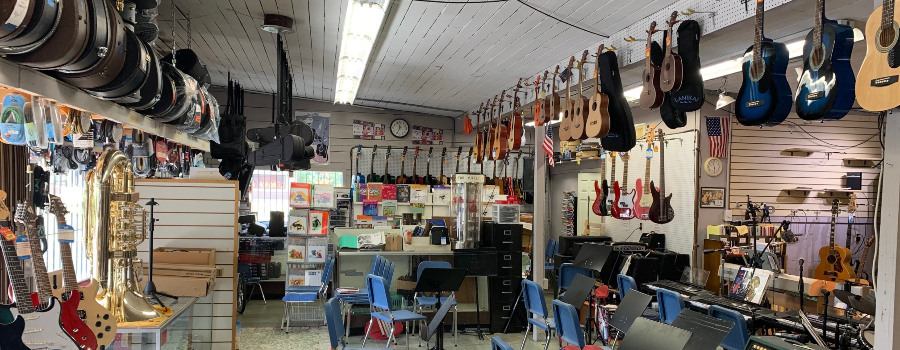
YAMS offers lessons in a variety of instruments, in a variety of price ranges. We also offer a unique Rent-to-Own program that is VERY family friendly!

We currently offer lessons in all the fretted instruments (guitar, bass, dobro, mandolin, etc.), piano, percussion, band and orchestra instruments, and Suzuki violin. Lessons are usually 25-30 minutes, once per week.

Prices are set by the individual teacher, but generally run between $15 and $30 per half-hour lesson. Most students take one lesson per week, though a few motivated students have two lessons each week. We also have an informal student recital about twice a year at the store, to give the students some performing experience.

These are currently our teachers. Click on their name for more information.

Fretted Instruments, Drums, Band & Orchestral instruments (beginners)
Emmett Young

Piano
Tom Rule (also Music Technology, Music Theory, and Keyboards)
Wanda Patrick

Guitar/Bass
Matt Moncrief
Chris Bartlett
John Huey


Drums
Mark Williams

Flute, Clarinet
Clarissa Jones

Violin/Strings
Emmett Young
Wanda Patrick

Saxophone
Dana Harris

Trumpet / Brass
Jerry Mullins


WHY take music?
Music is unique among the professions (along with the other performing arts) in that it can be a profession, a sideline, or a hobby. It is something you DO, which is very enjoyable. For many, that is the most enjoyable aspect - that by studying music you are developing a SKILL with which you can create something you and others enjoy. It is also fun and satisfying to know you are better now than you were just a few weeks ago.

Aside from these benefits, the study of music does something to your brain. Statistically, students who participate in an organized music activity (such as a serious school performing group, or who take lessons) score higher on those standardized tests we see everywhere. They also have a greater chance of being able to manipulate information “in their head” - possibly because they have been dealing with an intangible thing (music) in their lessons.

Need some more reasons? Music students in general have higher SAT scores - 52 points on the verbal, 37 points on the math sections. Making music activates disparate areas of the brain - meaning that musicians can better use the entire brain to solve problems, not just the logical left side or the creative right side. Studies in Rhode Island indicate that sequential, skill-building instruction in music can improve student's scores in math and reading. Music enhances spatial reasoning skills better than computer instruction - the skills so critical in math, engineering, science, and even chess. Music even increases self-esteem and critical thinking skills, and it enhances the abilities so critical in collaborative work.

Musicians are constantly adjusting decision on tempo, tone, style, rhythm, phrasing, and feeling - training the brain to become incredibly good at organizing and conducting numerous activities at once. Dedicated practice of this orchestration can have a great payoff for lifelong attentional skills, intelligence, and on the ability for self-knowledge and expression.

Studying music encourages self-discipline and diligence, traits that carry over into intellectual pursuits and that lead to effective study and work habits. An association of music and math has, in fact, long been noted. Creating and performing music promotes self-expression and provides self-gratification while giving pleasure to others.

A research team exploring the link between music and intelligence reported that music training is far superior to computer instruction in dramatically enhancing children's abstract reasoning skills, the skills necessary for learning math and science.

Secondary students sho participated in band or orchestra reported the lowest lifetime and current use of all substances (alcohol, tobacco, illicit drugs).

The US Department of Education lists the arts as subjects that college-bound middle and high school students should take, stating "Many colleges view participation in the arts and music as a valuable experience that broadens student's understanding and appreciation of the world around them".

The best engineers and programmers in Silicon Valley are very nearly all musicians.

Beyond all of that, having the ability to make music just makes life more interesting! So what are you waiting for? Contact us now to setup some lessons!

Need some more reasons?
Try the Educational CyberPlayGround - Music Makes You Smarter

How long will it take?

That's one of those "It depends" answers! It depends on how much REAL practice the student does (i.e. practicing with brain engaged, not just goofing around). CONSISTENT practice is also a key - playing the instrument every day (even if it's just several 5-minutes-at-a-time sessions).

Other good advice: